
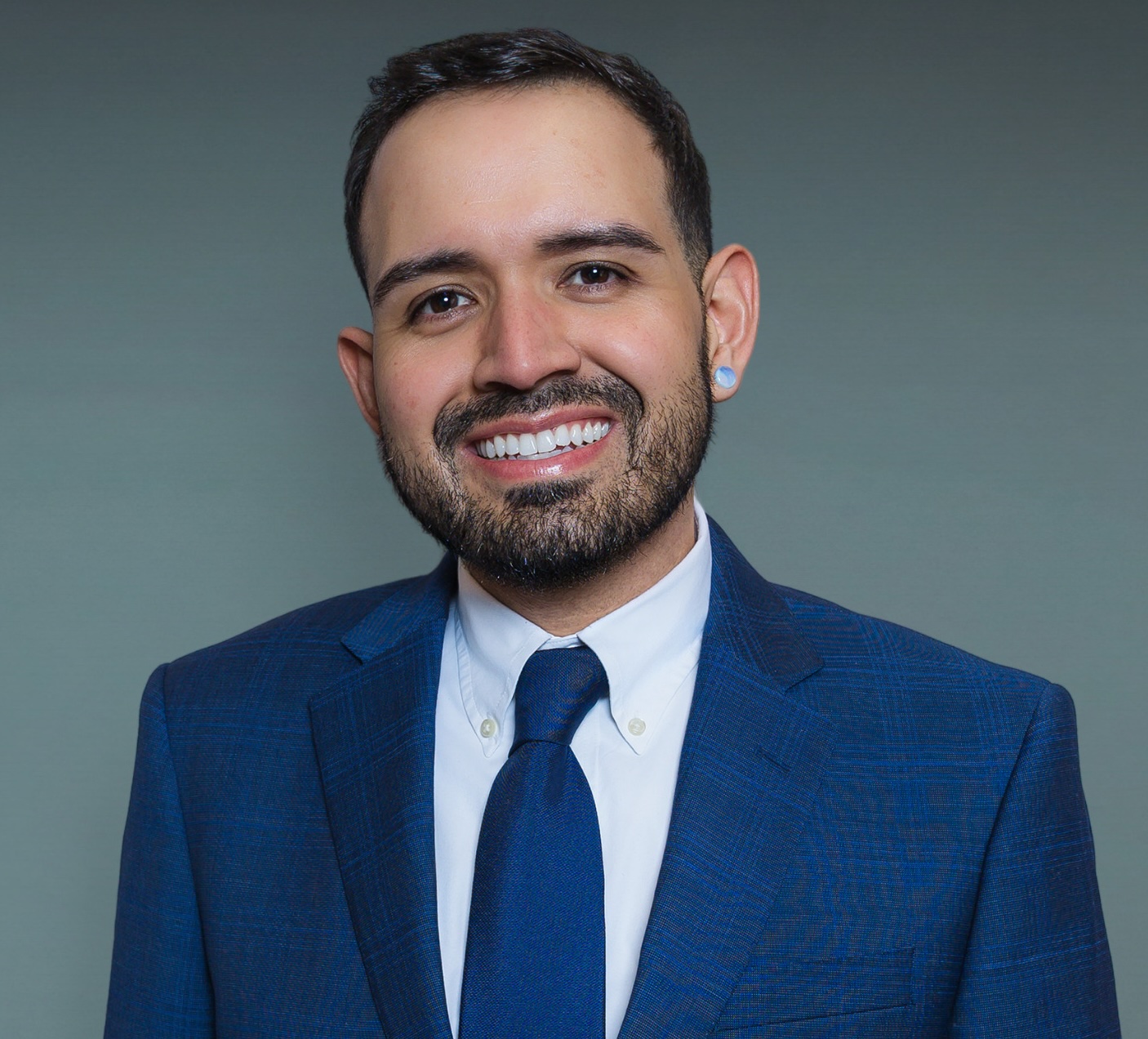
Director of Research- NYU Langone Concussion Center
Assistant Professor- Department of Rehabilitation Medicine
New York University Grossman School of Medicine
Dr. Hector Arciniega is a neuroscientist in the Department of Rehabilitation Medicine at NYU Grossman School of Medicine and Director of Research for the NYU Langone Concussion Center. He is also a training faculty member in the Institute for Translational Neuroscience and the Vilcek Institute of Graduate Biomedical Sciences. His research program focuses on understanding the neurological consequences of head injury across the lifespan through advanced neuroimaging, translational neuroscience, and clinical investigation.
Dr. Arciniega leads a multifaceted and highly interdisciplinary research program centered on three major areas of inquiry. The first focuses on understanding the long-term neurological consequences of repetitive head impacts sustained through participation in contact and collision sports, including American football. His work in this area aims to identify in vivo biomarkers associated with traumatic encephalopathy syndrome (TES) and chronic traumatic encephalopathy (CTE), a progressive neurodegenerative disease that currently can only be definitively diagnosed postmortem. His research integrates multimodal neuroimaging, neurobehavioral assessment, fluid biomarkers, and computational approaches to investigate how cumulative exposure to repetitive head impacts alters brain structure, white matter integrity, glymphatic-associated systems, and functional brain organization across the lifespan.
A central component of Dr. Arciniega’s research involves the use of advanced structural, diffusion, and functional MRI techniques to characterize subtle neuroanatomical and neurophysiological alterations associated with repetitive neurotrauma. His work has contributed to the identification of structural abnormalities involving cortical sulci, ventricular morphology, perivascular spaces, cavum septum pellucidum, and deep gray matter structures in former athletes exposed to repetitive head impacts. He has also contributed to research investigating white matter microstructure, brain aging, and tau-related neurodegenerative processes in individuals at risk for CTE. Through these efforts, his laboratory seeks to improve understanding of the biological mechanisms linking repetitive head impacts to neurodegeneration and later-life cognitive, emotional, and behavioral dysfunction.
In parallel, Dr. Arciniega’s work emphasizes the importance of large-scale collaborative and harmonized neuroscience research. He serves as Co-Leader of the ENIGMA Sports-Related Injury Working Group, an international initiative focused on harmonizing multimodal neuroimaging and biomarker research in concussion and repetitive head impact exposure. His research contributes to ongoing efforts to improve reproducibility, scalability, and clinical translation in traumatic brain injury and neurodegeneration research through advanced computational imaging approaches and collaborative science.A second major focus of Dr. Arciniega’s research examines how social determinants of health and structural inequities influence head injury risk, access to care, recovery trajectories, and long-term neurological outcomes. His work in this area seeks to better understand how factors such as socioeconomic disadvantage, healthcare access, race and ethnicity, environmental stressors, and healthcare system-level disparities shape outcomes following traumatic brain injury. By integrating neuroimaging, epidemiological, and electronic health record approaches, his research aims to address persistent inequities in neuroscience and brain injury research while informing more equitable clinical and public health strategies.
A third major component of his research program investigates traumatic brain injury during and after pregnancy, an understudied area with potentially profound implications for maternal and fetal health. His work examines how head injuries sustained during pregnancy may influence maternal neurological outcomes, psychiatric health, pregnancy complications, and fetal development. This line of research also explores traumatic brain injury associated with intimate partner violence, an area that remains substantially underrecognized in both neuroscience and obstetric research. By leveraging large-scale electronic health record databases, longitudinal neuroimaging, and translational neuroscience approaches, Dr. Arciniega’s laboratory seeks to improve identification of at-risk populations and better understand the long-term consequences of maternal brain injury for both parent and child.
Before joining the faculty at NYU Grossman School of Medicine, Dr. Arciniega completed postdoctoral training under the mentorship of Martha Shenton and Sylvain Bouix in the Psychiatry Neuroimaging Laboratory at Harvard Medical School. There, his research combined neuroimaging, neuropsychological, neuropsychiatric, and behavioral approaches to investigate the long-term consequences of repetitive head impacts in former American football players. His postdoctoral work emphasized the integration of multimodal imaging and advanced computational analysis to better understand exposure-related brain alterations associated with neurodegenerative risk.
Dr. Arciniega earned both his bachelor’s and doctoral degrees in neuroscience from the University of Nevada, Reno, under the mentorship of Marian Berryhill. His doctoral research focused on the cognitive and neural consequences of concussion and aging, with particular emphasis on working memory dysfunction and neural network alterations. During this period, he developed expertise in electroencephalography (EEG), non-invasive neurostimulation techniques, cognitive neuroscience, and experimental approaches to human behavior. His early work investigating working memory and executive dysfunction after concussion laid the foundation for his current translational neuroscience program focused on long-term neurological outcomes after head injury.
Dr. Arciniega has received numerous national honors and awards recognizing his scientific contributions, leadership, and commitment to advancing neuroscience research. These distinctions include the NIH/NINDS Diversity Specialized Predoctoral to Postdoctoral Advancement in Neuroscience (D-SPAN F99/K00) Award, the NIH/NIMHD Loan Repayment Program Award, the Rainwater Charitable Foundation Tau Leadership Award, Harvard’s Mind Brain Behavior Young Investigator Award, the Burroughs Wellcome Fund Postdoctoral Diversity Enrichment Program Award, the Black Men’s Brain Health Emerging Scholars Fellowship, and the Henry Grass Rising Star in Neuroscience Award from the Grass Foundation. He currently serves as principal investigator on federally and foundation-funded research projects focused on neurodegeneration, repetitive head impacts, women’s health, and traumatic brain injury.
His work has been published in leading scientific and medical journals, including Brain, Nature Medicine, JAMA Network Open, Alzheimer's & Dementia, Brain Communications, and Neurology Clinical Practice. In addition to his research activities, Dr. Arciniega actively mentors trainees at multiple educational levels, including undergraduate, graduate, medical, and postdoctoral students, as well as residents and fellows. His broader academic mission centers on advancing translational neuroscience while fostering a more inclusive and interdisciplinary future for brain injury and neurodegeneration research.
M.S., Clinical Investigation
Primary Advisor: Dr. Simona C. Kwon, DrPH, MPH
Equity, Diversity, Inclusion, and Belonging Leadership Graduate Certificate
Department of Psychology- Memory and Brain Laboratory
Ph.D., Neuroscience
Dissertation: Echoes of concussion: Behavioral and neural changes after injury.
Primary Advisor: Prof. Marian Berryhill
B.S. Neuroscience, Minor in Psychology, and Minor/Certificate in Gerontology
Department of Defense (DoD): Pocket-Sized Multi-System Mobile Medical Imaging Device for TBI Triage by Non-specialist/Untrained-Operators
Grant ID: N/A
PI: Dr. Hector Arciniega
NINDS: Advancing Multimodal Imaging Biomarkers of Traumatic Encephalopathy Syndrome for the In Vivo Detection of Chronic Traumatic Encephalopathy in Former Football Players
Grant ID: N/A
PI: Dr. Hector Arciniega
NICHD: Understanding the Impact of Healthcare System and Clinician Factors on Disparities in Maternal Morbidity and Mortality (R01 - Clinical Trial Optional): IMPACT-IPV: Infant, Maternal, and Pregnancy Adverse Consequences of TBI from Intimate Partner Violence.
Grant ID: N/A
MPI: Dr. Hector Arciniega and Dr. Jonathan Lifshitz
Burroughs Wellcome Fund- Next Gen Pregnancy Initiative: PREGNANT: Pregnancy Risk Evaluation for GestationalNeurotrauma and Adverse Neurodevelopmental Trajectories
Grant ID: N/A
PI: Dr. Hector Arciniega
Alzheimer's Association Research Grant to Promote Diversity - New to the Field: Head Impacts & Neurodegeneration
PI: Dr. Hector Arciniega
NINDS/NIMH: Exploratory Neuroscience Research Grant R21: Understanding the neuroanatomical abnormalities of repetitive head impacts.
Grant ID: NS140565
PI: Dr. Hector Arciniega
NIH/ NINDS: Blueprint Diversity Specialized Predoctoral to Postdoctoral Advancement in Neuroscience (D-SPAN) Award K00: Understanding the Cognitive and Neural Consequences of Repetitive Head Impacts.
Grant ID: K00NS113419
PI: Dr. Hector Arciniega, Mentors: Prof. Martha Shenton and Prof. Sylvain Bouix
NIH/NINDS Blueprint Diversity Specialized Predoctoral to Postdoctoral Advancement in Neuroscience (D-SPAN) Award F99: Understanding the Cognitive and Neural Deficits Associated with mTBI: A Resting-State Study.
Grant ID: F99NS113419
PI: Hector Arciniega, Mentors: Prof. Marian E. Berryhill & Prof. Gideon Caplovitz
Graduate Student Association Research Grant Program: Compensation Restoration: How does tDCS Enhance Visual Working Memory?
PI: Hector Arciniega, Mentor: Prof. Marian E. Berryhill
Leon Thal Summit: Advancing the Science of CTE: Emerging Biomarkers for Research and Clinical Translation, Cleveland Clinic (Nevada)
Grand Rounds: NYU Langone Concussion Center
International Neurotrauma Conference- Cambridge, UK (symposium speaker)
Common Ground
NYU Grossman School of Medicine
11th Annual Concussion Conference
NYU Concussion Center- CME Lecture
Emerging Leaders in Neuroscience
Brain and Mind Research Institute at Weill Cornell Medicine
D-SPAN Panel - Transitioning to Faculty - Society for Neuroscience Annual Meeting
European Neurotrauma Organization - Munich, Germany (symposium speaker)
DIAGNOSE CTE Consortium - Annual Investigator Meeting
Flagstaff, AZ
Laboratory of Dr. Gerald Voelbel
New York University - Steinhardt School of Culture, Education, and Human Development - Department of Occupational Therapy
Rusk Rehabilitation Day - 75th Anniversary Celebration
New York University Grossman School of Medicine
Grass Foundation - Rising Star in Neuroscience Presentation
Marine Biology Laboratories
NIH/NINDS DSPAN BrainTrust
Department of Rehabilitation Medicine
New York University Grossman School of Medicine
Friedrich-Schiller-Universität Jena - Lehrstuhls für Klinische Psychologie
University of Nevada, Reno - Department of Psychology
International Neurotrauma Conference - Berlin, Germany (symposium speaker)
Chronic Traumatic Encephalopathy Center - DIAGNOSE CTE Consortium
Boston University School of Medicine - Boston, MA
Stuart T. Hauser Research Training Program in Biological and Social Psychiatry
Judge Baker Children’s Center/ Harvard Medical School
Chronic Traumatic Encephalopathy Center - DIAGNOSE CTE Consortium
Boston University School of Medicine - Boston, MA
Chronic Traumatic Encephalopathy Center - DIAGNOSE CTE Consortium
Boston University School of Medicine - Boston, MA
Stuart T. Hauser Research Training Program in Biological and Social Psychiatry
Judge Baker Children’s Center/ Harvard Medical School
University of Nevada, Reno - Department of Psychology
Laboratory for Cognition and Neural Stimulation
Perelman School of Medicine, University of Pennsylvania
University of Nevada, Reno - Department of Psychology
University of Nevada, Reno - Department of Psychology
Douglas County School District, Northern Nevada
University of Nevada, Reno - Department of Psychology
Douglas County School District, Northern Nevada
Douglas County School District, Northern Nevada
NYULangone Physician Focus- Brain Features in Living Athletes Linked to CTE Risk: https://physicianfocus.nyulangone.org/brain-features-in-living-athletes-linked-to-cte-risk/
NYULangone Health NewsHub- Distinct Brain Features in Football Players May TellWho Is at Risk of Long-Term Traumatic Disease: https://nyulangone.org/news/distinct-brain-features-football-players-may-tell-who-risk-long-term-traumatic-disease
DailyExpress-Shane Tamura’s well-planned mass shooting makes it unlikely he had CTE, expert says: https://www.the-express.com/news/us-news/178928/shane-tamura-cte-midtown-mass-shooting
Nevada Today
Evidence Shows Electrical Stimulation Can Improve Low Working Memory
Live Science
Concussions and Cognitive Skills: What’s the impact?

Department of Rehabilitation Medicine
240 East 38th Street
New York, NY 10016

